Contextual Studies 1: The social Purpose of design.

In today’s lecture, we’ve talked about the purpose of design and the social responsibilities of the designer.

We started off, by looking at the ‘First Things First’ 1964 manifesto.  This piece was published and written by Ken Garland along with 20 other designers, photographers and students, the manifesto was a reaction to the committed society of 1960s Britain and called for a return to a humanist aspect of design. The main argument of this manifesto is that the mainstream media is oversaturated with advertisements that have no higher relevance, nor importance and has no positive impact on our society, that instead of focusing on actual issues and using this media to address it, to the people, we rather advertise cigarettes, alcohol and other consumer goods. In short, it rallied against a consumerist culture and aimed to radicalise designers.

Personally, it was the first time I heard about it and I am glad that such a thing exists because it addresses issues that are relevant today. I myself think that today’s media is oversaturated and with the fast-moving technology it’s not going in any ‘positive’ direction and I feel like we’re not using it ‘correctly’ and if we are… it’s not effective. It’s on such a small scale that it is not noticeable. It’s lost in the ‘noise’ of ‘trivial consumer purposes’.
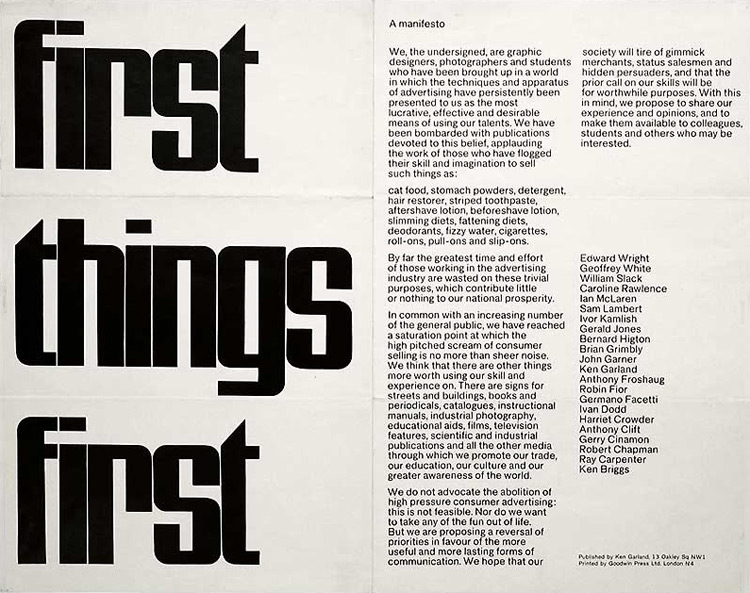
manifesto.jpg(Garland, 1964)

Moving on, we talked about the early 19th century, when huge factories, manufactured millions of goods and items which had formally been made by people. It started to replace artisans and craftsman for the sake of mass production. Which in my opinion was a natural order of things and with the technology advancement, it was bound to happen. I am an adherent of handcrafted and handmade objects and I totally agree with William Morris, when he said, ‘Have nothing in your house that you do not know to be useful or believe to be beautiful.’ But mass production was unavoidable.

We looked at the Arts and Crafts Movement and its response to mass production, which lead us to the topic of Bauhaus. ‘Design for a better world: Bauhaus’ (1919-1933, Germany)

Bauhaus was a revolutionary school of art, architecture and design established by Walter Gropius at Weimar in Germany in 1919. The Bauhaus teaching method replaced the traditional pupil-teacher relationship with the idea of a community of artists working together. Its aim was to bring art back into contact with everyday life, and architecture, performing arts, design and applied arts were therefore given as much weight as fine art.’

ddfbdefe171e4f0dea0de4079d8cd077.jpgBauhaus Building by Walter Gropius (1925–26)

Honestly, I find it difficult to imagine what the world would be like if the Bauhaus had never happened. Many Bauhaus creations are classics and they influence current graphic/product design. I think if the Bauhaus had never existed, a design would be negatively affected, without its philosophy and design approach.

Furthermore, we’ve moved on to the topic of human rights movements and how designers lend their skills to articulate the realities and demands of the movement. We looked at 1963 civil rights in the United States of America and the rise of new protest movement ‘CND’ in the United Kingdom, 1960-63.

I particularly enjoyed talking about postmodern culture in America. Where the advertisements are really saying “Buy me, I’ll change your life” to us, and what we’re being sold is not real-world products but simulacra like “the societal construct of a happy life.” (Ryder, S. 1999.)
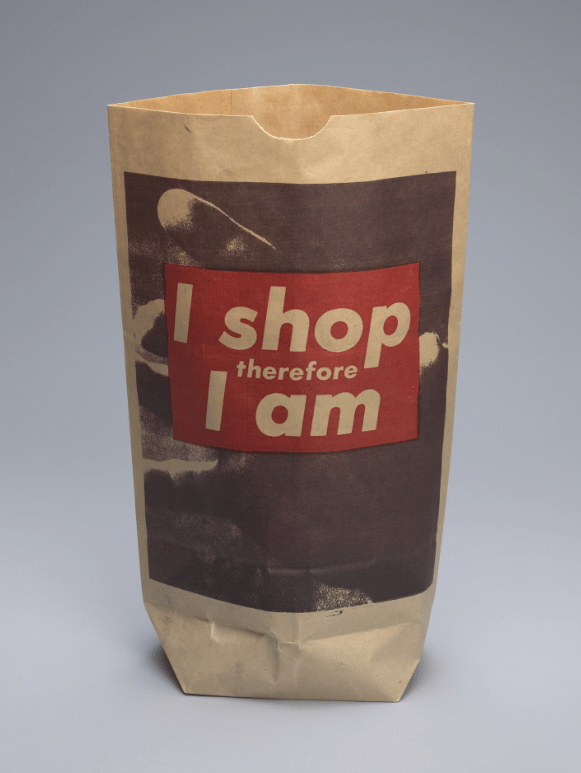
i shop therefore i am.png(I shop therefore I am by Barbara Kruger 1990)

The meaning of ‘I shop therefore I am’ is that a person is defined not by what they think but what they own. Kruger is critiquing the materialistic ways of society back then and honestly, nothing really changed, this piece is as relevant as it was when it came out. Now a day’s people, care more about what brand of sneakers they wear rather than focusing on actual characters.

Finally, at the end of the lecture, we were asked a couple of question, which really stuck with me.

How can a designer (Basically future me) affect social and political change?

Can design be more than a service to clients?

When does a designer have to take responsibility for a client’s actions?

At what point must a designer take a stand?

I think that…

Social change is necessary for solving the unsustainable level of consumption in our society. We as designers are learning to do this job as effectively as possible. I guess that’s why we’re here, after all, to get our degree and solve issues in our everyday life. That’s our job. In the past Design, the industry has played a part in the creation of consumerism, therefore, it has a responsibility to play a part in solving the problems it has caused. There is no clear answer on how a designer can effect social change, there are too many factors. I think the best way to go about it, is to really understand the issue your trying to solve, seeing what is needed and finding the best solution to solve issues.

It is our job to improve our society. It does not matter whether you study product design or graphic design, as long as you call yourself a designer your job is to take a stand, focus on the issues surrounding us and fixing them.

_n.
Contextual studies 1: Generate and Automate

Dear Dean and Andrew…

Today’s lecture was about Generative Design.

Generative Design is a design process that involves a program. That program will generate a certain number of outputs that meet certain constraints. The designer can affect the final outcome by fine-tuning and changing minimal and maximal values of the algorithmic inputs, in which a variable of the program meets the set of constraints, in order to reduce or augment the number of outputs to choose from.

In this lecture, we’ve looked at different time periods that explore automation and algorithmic designs.

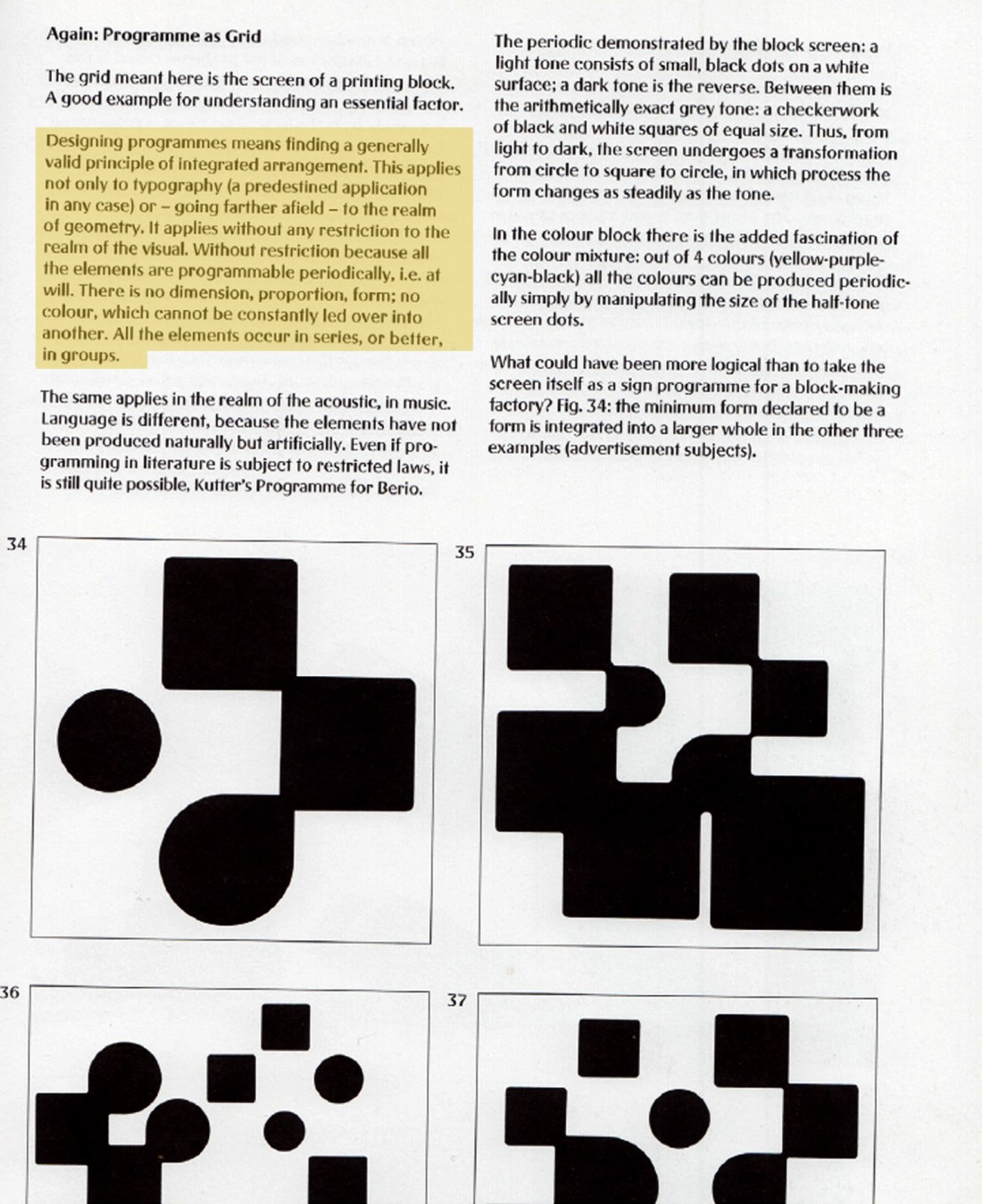
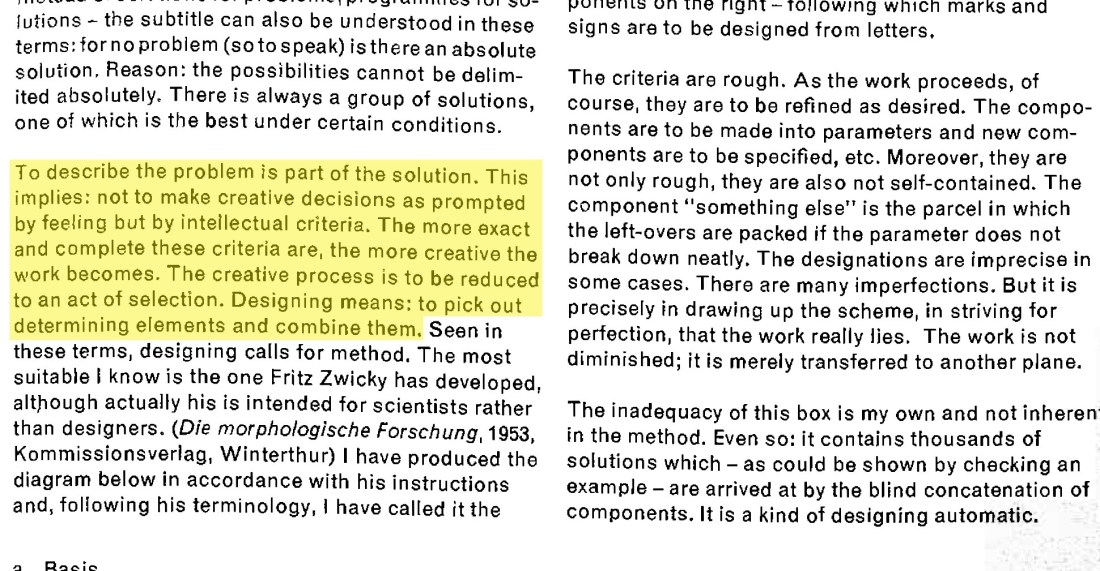
Starting with Karl Gerstner’s ‘Designing Programmes’ In his book he says;

designing programmes quote

‘To describe a problem is part of a solution. This implies: not to make creative decisions as prompted by feeling but by intellectual criteria. The more exact and complete these criteria are, the more creative the work becomes. The creative process is to be reduced to an act of selection. Designing means: to pick out determining elements and combine them’.

Gerstner (2007, p12)

By saying this Gerstner says that instead of influencing the final outcome with ‘feeling’ based opinions, we can easily create a much more interesting and, in a way more creative outcome by reducing it to its process. The more advanced the process the more creative the work becomes.

Untitled-2.jpg

Untitled-3.jpg

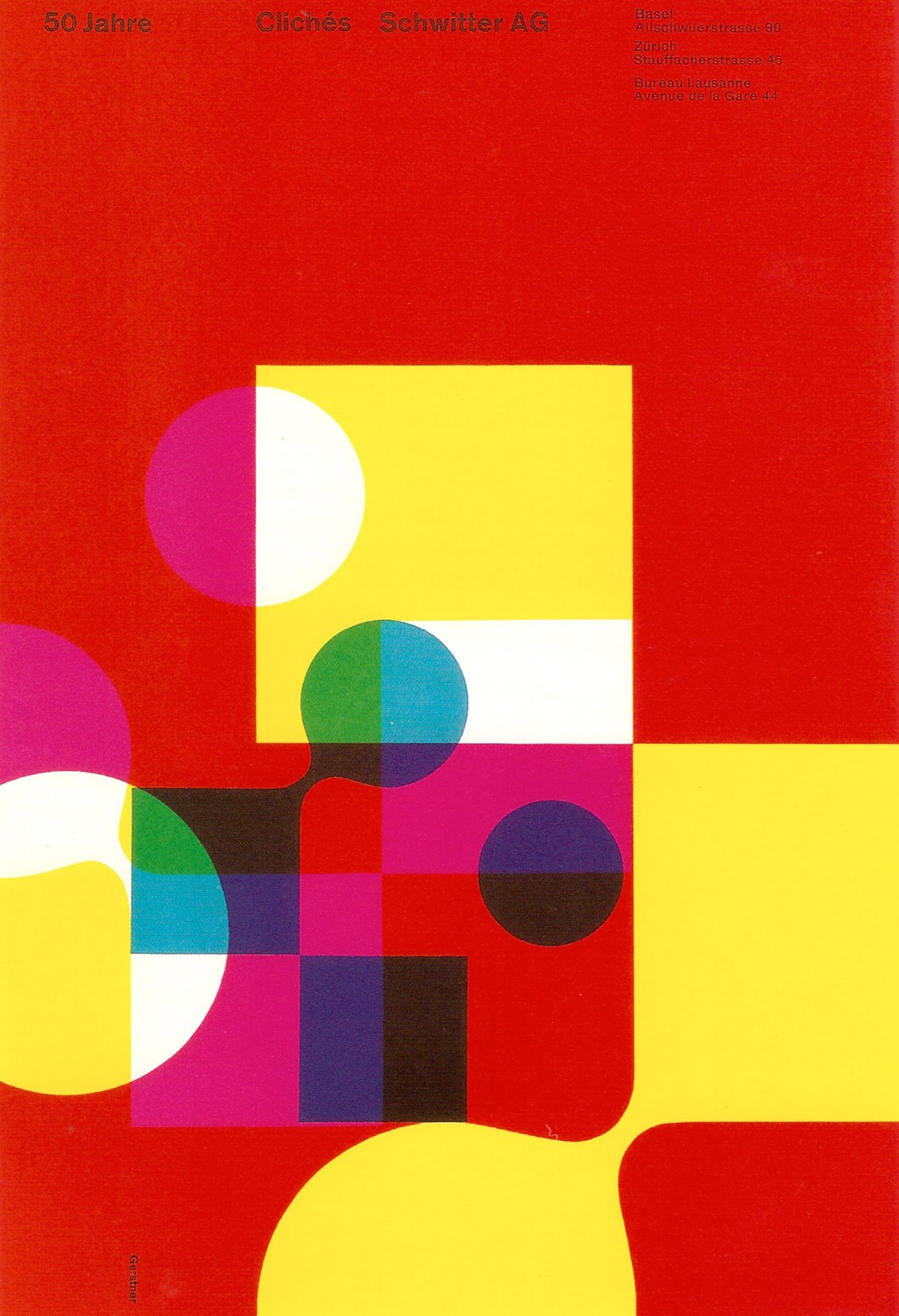
Furthermore,, looking at the generative design thorough Gerstner’s lens is very interesting. Gerstner defines design as picking out determining elements and combining them. Much of his design theory hinges on the designer’s ability to make informed choices based on understanding of the problem and the combinations of elements.

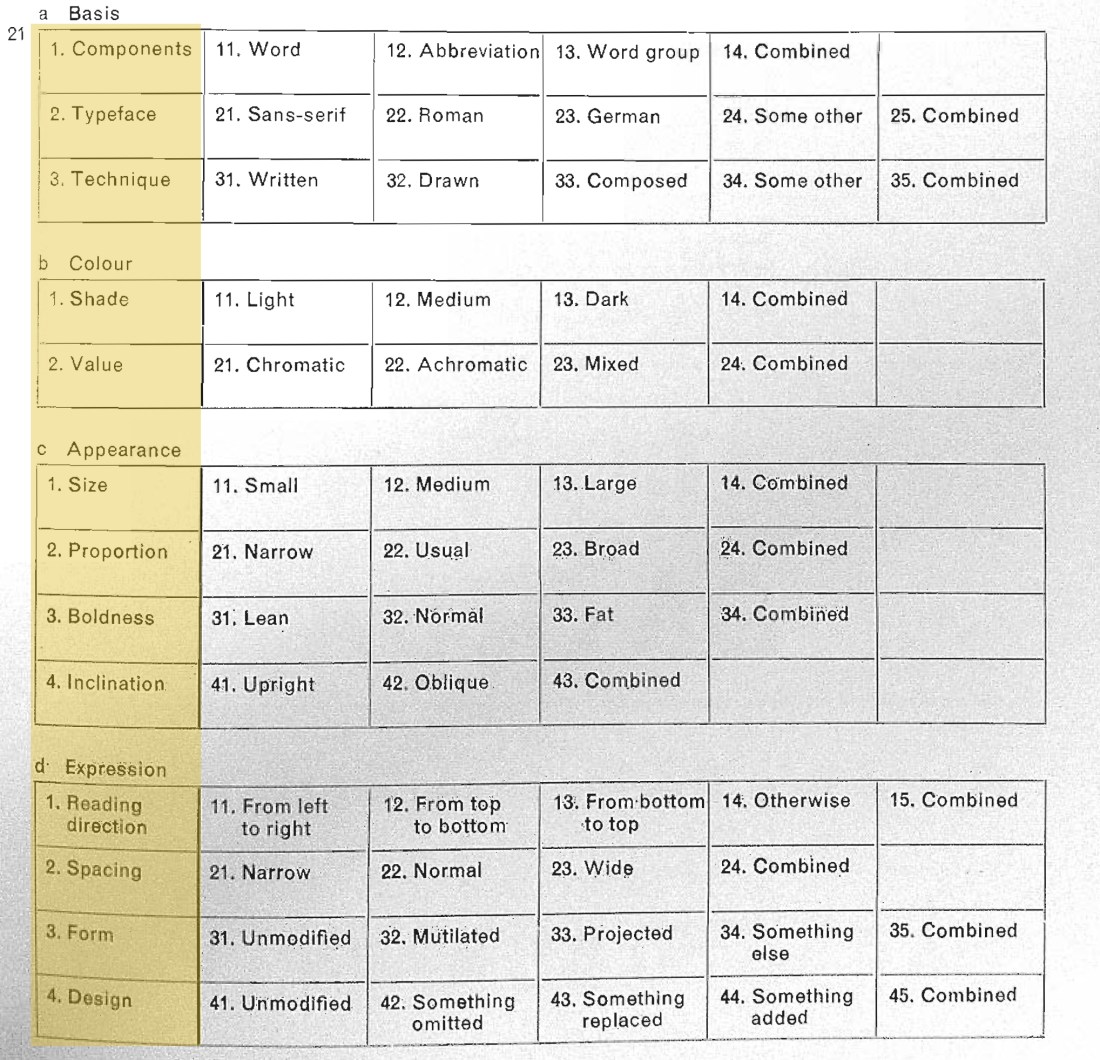
A prime example is his Morphological Typogram System. Usually, for a graphic designer, the development of a logo takes time, experimenting with different variations, sizes, colours to find the best solution. Gerstner’s program is intended for designers to systematically produce a number of variations of such logo. It lists a number of parameters of type on the left column and then it’s broken down into how each particular parameter can be modified and eventually affect the final outcome. For example, the typeface is broken down into sans- serif, roman, german etc…

Untitled-4.jpg

With this programme, the designer can quickly determine a good approach to the wordmark and then develop a solution.

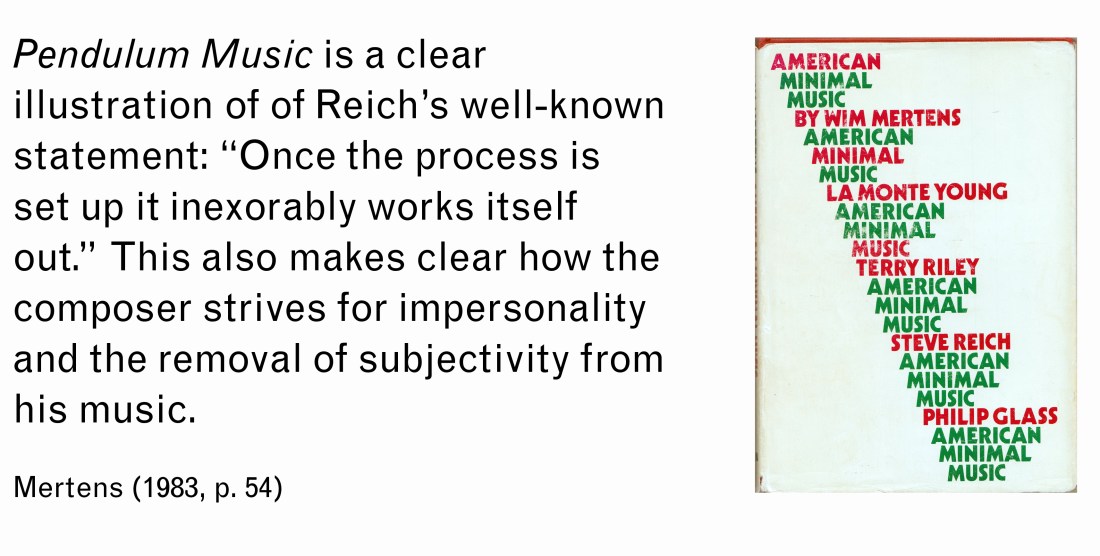
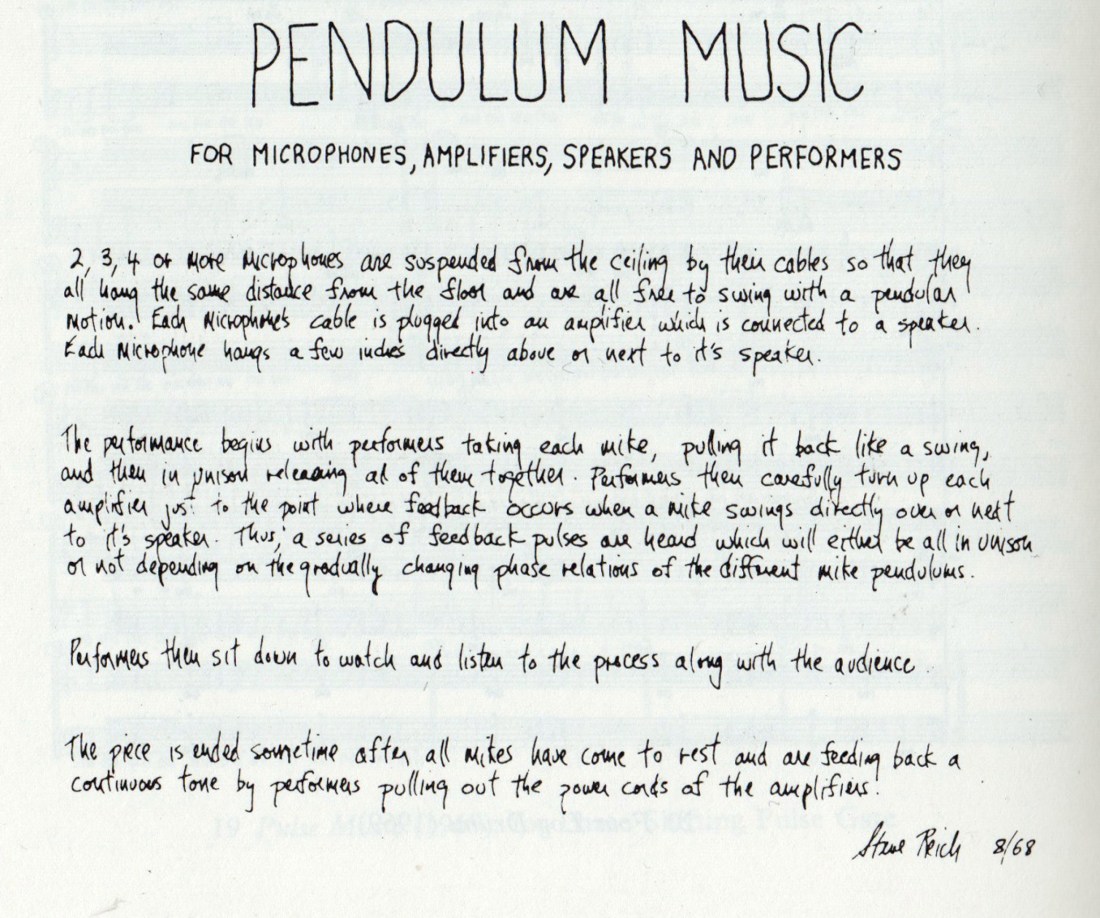
Moving on, We’ve looked at ‘Pendulum Music’ by Steve Reich. Personally, I found it really interesting because it made me realise that generative design is not only applicable within the realm of visual arts, but also in other aspects of design, such as music in this particular example.

Untitled-5.jpg

GENERATE-AUTOMATE-16.jpg

Same as visual generative designs, the creation of pendulum music sits in the process. A set of instruction was provided to create this outcome. It shows that the creative process is the art itself, sometimes even more than the outcome.

I was asked, “Who is the ‘creative’ author of this music?” and whether the piece is personal or impersonal.  In my opinion, the author of this piece is Steve Reich, this is because he was the one who came up with the concept and the set of instructions. He provided a step by step process that can be followed by anyone, but it doesn’t mean that with each ‘creation’ the ownership changes from person to person.

Furthermore, I think that the outcome is impersonal. This is because only the instructions can be described as a feeling based input to this piece, once the performers released the microphones the music was a creation of the process and it was not influenced by anyone. It clearly shows that the author was looking for impersonality and to remove any subjectivity from his music.

Finally, to conclude this blog I think that Generative Desing helps generate a random outcome, which otherwise would be difficult to achieve.  It opens up a ‘door’ to new, never before explored ideas/outcomes. It attracts attention to the process rather than the final outcome itself, making the creative process the art itself.

_n.


Contextual studies 1: Introduction to Semiology


What I got from this lecture…


Semiology is another term for semiotics. It is a study of signs and symbols and their use or interpretation. During this lecture, I’ve learned that the underlying principles of semiotics were first heard by Saussure’s students. Ferdinand de Saussure was a Swiss professor of linguistics and semiotics. His ideas laid a foundation for many significant developments in both linguistics and semiology in the 20th century.

He says that our language is not a function of the speaker, but it is a product passively assimilated by the individual. It is conventional, it belongs to us all.

1200px-Peace_sign.svg

But he wasn’t the only one who is considered as the founder of semiotics. Charles Sanders Peirce was an American philosopher, logician, mathematician and scientist who had his own theory for semiotics. The importance of semiotic for Peirce was wide-ranging, as he himself said,

“[…] it has never been in my power to study anything,—mathematics, ethics, metaphysics, gravitation, thermodynamics, optics, chemistry, comparative anatomy, astronomy, psychology, phonetics, economics, the history of science, whilst, men and women, wine, metrology, except as a study of semiotic”

– Charles Sanders Peirce

Pierce and Saussure both had a different interpretation of the field of semiology. Saussure saw it through the lens of language and its structures. So, in his interpretation semiotics is a system of words rather than signs.

Saussure says that the relationship between the concept and the sound image is more likely to be based more on a random choice and personal whim, rather than any reason or system.

On the other hand, Pierce recognized semiotics as whatever that communicates. He saw signs as anything that’s perspective, knowable or imaginable:

“[…]every picture, diagram, natural cry, pointing a finger, wink, a knot in one’s handkerchief, memory, dream, fancy, concept, indication, token, symptom, letter, numeral, word, sentence, chapter, book, library.”

– Charles Sanders Peirce

He had a broader definition of signs.


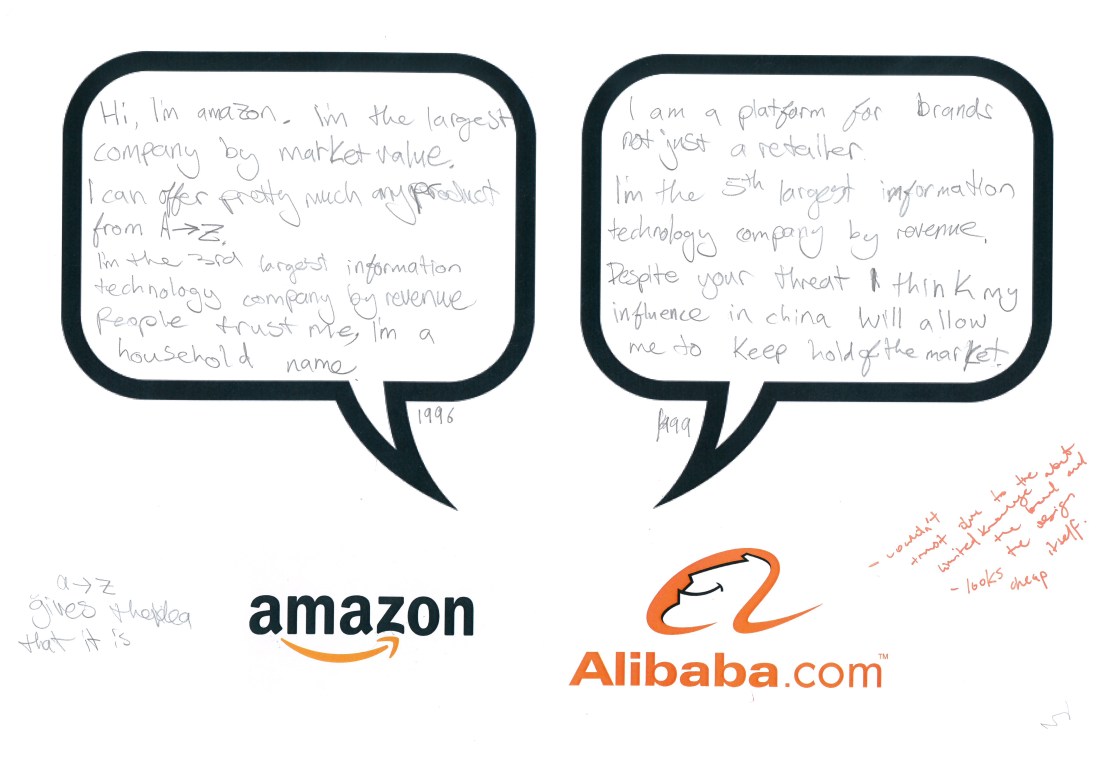
In class activity: We were given two brands, and based on the research in pairs, we created a dialogue between them…

Brand Mythologies-12


Sign: The information we respond to.

Interpretant: The interpretant is not whoever interprets it, the interpretant is what is made of the sign.

Object: What the sign refers to.

There are three types of signs:

Icon: is a sign that resembles something.

Index: is a sign where there is a direct relationship (smoke means fire).

Symbols: are abstract and deals more with meaning (red means stop).


Today’s emoji are a good example. The impact of a message is predicated on how the information is organised and what signs are used within it. This modern medium may be universally loved but they’re not always universally depicted. Not all of them translate well, which leaves a room for misinterpretation or interpretation. The effectiveness of a product, in this case, ‘emoji’ is measured how many people are using it. It’s about the response and popularity usage.

In conclusion, I really enjoyed this lecture as it opened my eyes to a deeper thought to this subject. Extended research helped me understand that in order for signs to exist and mean anything, they have to be understood. A sign needs an interpretant to stand between it and the object it signifies.


“Semiotics is concerned with everything that can be taken as a sign.”

– Umberto Eco

_n.

Chapter 2 How We Think about Seeing – Nicholas Mirzoeff

_Chapter 2 review …

In this Chapter, Nicholas Mirzoeff talks about vision. He starts off with describing how different activities affect our ability to see and react. Our understanding of vision changes accordingly to new technologies we develop. We learn that the diagrams of how we see have and how we understand seeing have changed multiple times over the past decade.

Starting with ancient Greeks and Romans who believed that eyes threw rays to ‘touch’ the things we see. They also believed that objects emitted little copies of themselves that got smaller and smaller until they entered the eye, which now for us is an absurd idea, but back then with their technology and their understanding it was completely normal.  

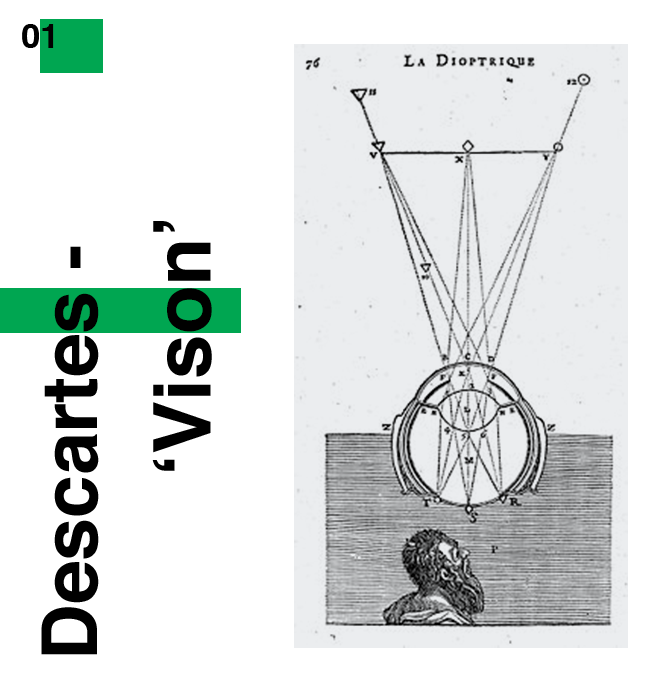
Until Descartes created ‘Vision’ diagram. He compared seeing and understanding of vision to a ‘courtroom’, where the eye presents the evidence for the judge to decide.  He was the first one who implemented the idea of light entering our eye. He showed light entering the eye as an asset of geometric lines. By that, he solved the question of how a large object can be seen.


Untitled-1

Then came the more modern Fellman’s and Van Essen’s diagram – ‘Hierarchy of Visual Areas’. It reflects well on our times because it shows the idea of vision in a computer as an image.  I feel like having an idea of what seeing is, is great, no matter, whether it is an ever-changing diagram.

Untitled-2

In summary, he communicates that our understanding of vision and what we see changes deepening on the current technology. Today, Modern neurology is a new way of visualizing the mind – the vital visual metaphor of our time. We will always seek new ways of understanding visual communication and that’s what Mirzoeff is trying to tell us in this chapter.

Chapter 1 How to See Yourself – Nicholas Mirzoeff


_Chapter 1 review …

Throughout the first chapter, the author discusses the overall change and development of self-portrait and its effects on our ever-changing identities. Thanks to his analysis, I can look at distinct stages of history and pinpoint different aspects from that era and see how they influence today’s status of self-image.

In a sense, Mirzoeff is helping to understand what a self-portrait means. He explores various themes throughout this chapter, which includes the focus on self-image and how gender and heroism are defined through them.

In my opinion, understanding the origins of a concept is important and here Mirzoeff is doing exactly that. He helps us appreciate the beauty and the long journey, ‘selfie’ and self-depiction went through. In a way, as I read through it, it made me more aware of what’s ‘behind’ the selfie.

From what the author is saying I understand that the images that we take of ourselves always have an agenda, no matter whether it is conscious or subconscious. We are always trying to create a better and more interesting depiction of ourselves.


hppltbyrd1

One of the examples that Mirzoeff uses in this chapter is the self-portrait by Bayard, (‘Self-portrait as a Drowned Man’ – 1839-44) also known as the first selfie. This photograph dramatizes the context to create a more interesting image. Here Bayard is trying to convince the audience that they are witnessing a picture of a drowned man, where in reality he wasn’t dead. ‘Some people even though that Bayard really was dead’ (p44) This shows how influential and powerful the depiction of drama and mood presented in this photograph conveys. It is not much different too what we see in today’s modern media. The whole idea is interesting and seductive.

hppltbyrd12

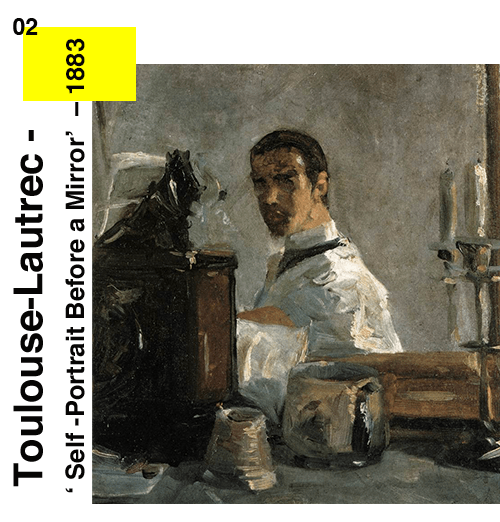
Another great example that surprised me how similar it is to today’s selfies is the self-portrait of Toulouse-Lautrec – ‘ Self -Portrait Before a Mirror’ (1883). He deliberately painted his reflection in a mirror, He chooses what he wants us to see. The painting conceals and reveals the truth. As we can only see his head and shoulders, it tells us that the artist is hiding something. It this case his disability. From what I understood, it challenged the traditional idea of self-portrait and brought new ideas to the genre of self-interpretation.

I think that this is a prime example of a connection between then and now and on how far today’s self-image came to be. Like in today’s world we use filters, edits and cropping tools to remove the unwanted parts in the photos we take, not much different to what he was doing.

In overall in this chapter Nicholas Mirzoeff is making connections between self-image from back then and now. He talks about different experimental uses of this media and how it shaped through the timeline of visual culture. He wants us to know that today’s selfie is here to stay. ‘ It shows how global visual culture is now a standard of everyday life…’(Mirzoeff 69)