
Dear Dean and Andrew…
Today’s lecture was about Generative Design.
Generative Design is a design process that involves a program. That program will generate a certain number of outputs that meet certain constraints. The designer can affect the final outcome by fine-tuning and changing minimal and maximal values of the algorithmic inputs, in which a variable of the program meets the set of constraints, in order to reduce or augment the number of outputs to choose from.
In this lecture, we’ve looked at different time periods that explore automation and algorithmic designs.
Starting with Karl Gerstner’s ‘Designing Programmes’ In his book he says;
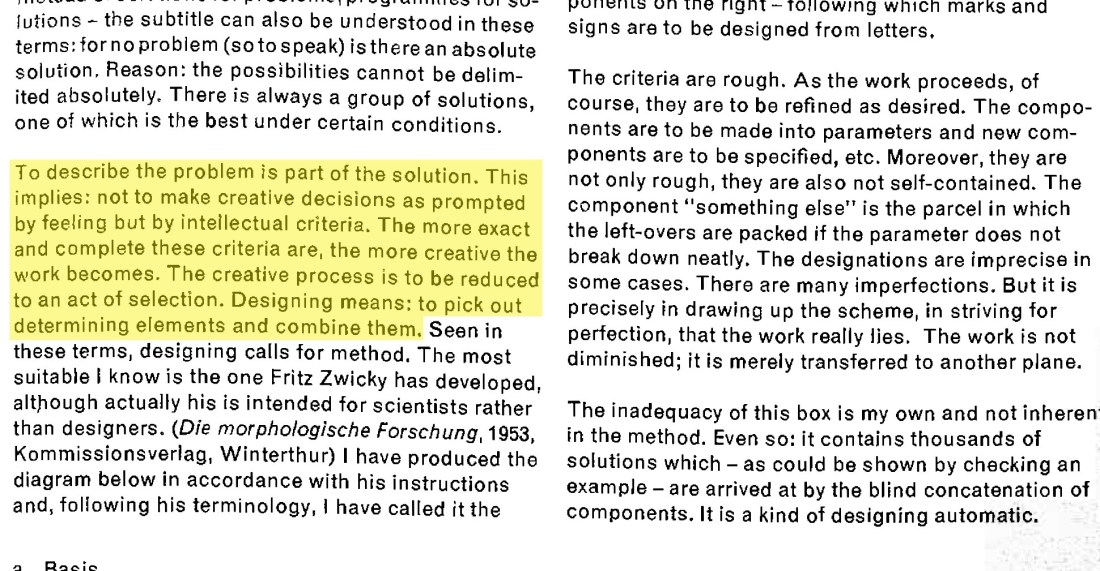
‘To describe a problem is part of a solution. This implies: not to make creative decisions as prompted by feeling but by intellectual criteria. The more exact and complete these criteria are, the more creative the work becomes. The creative process is to be reduced to an act of selection. Designing means: to pick out determining elements and combine them’.
Gerstner (2007, p12)
By saying this Gerstner says that instead of influencing the final outcome with ‘feeling’ based opinions, we can easily create a much more interesting and, in a way more creative outcome by reducing it to its process. The more advanced the process the more creative the work becomes.
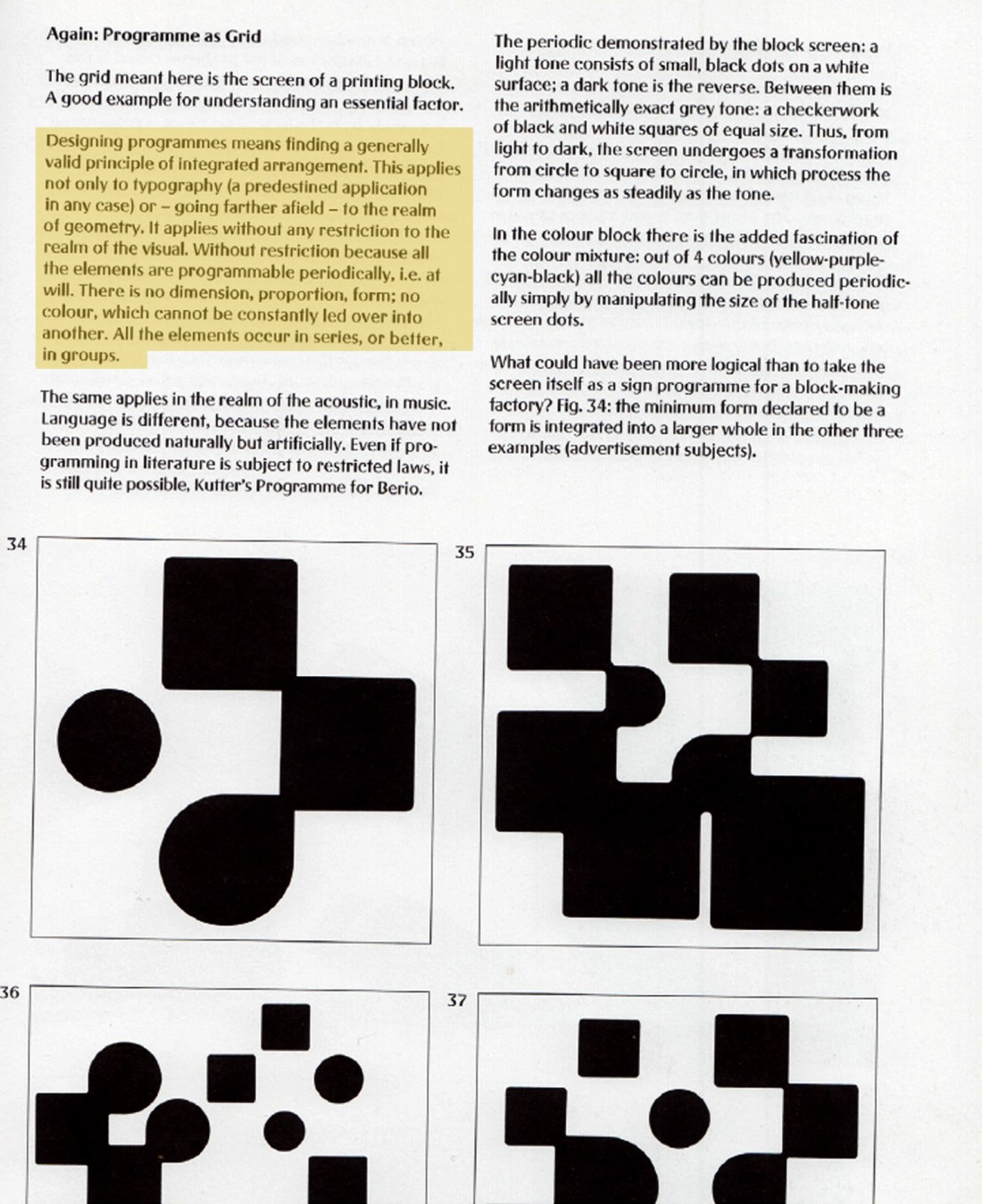
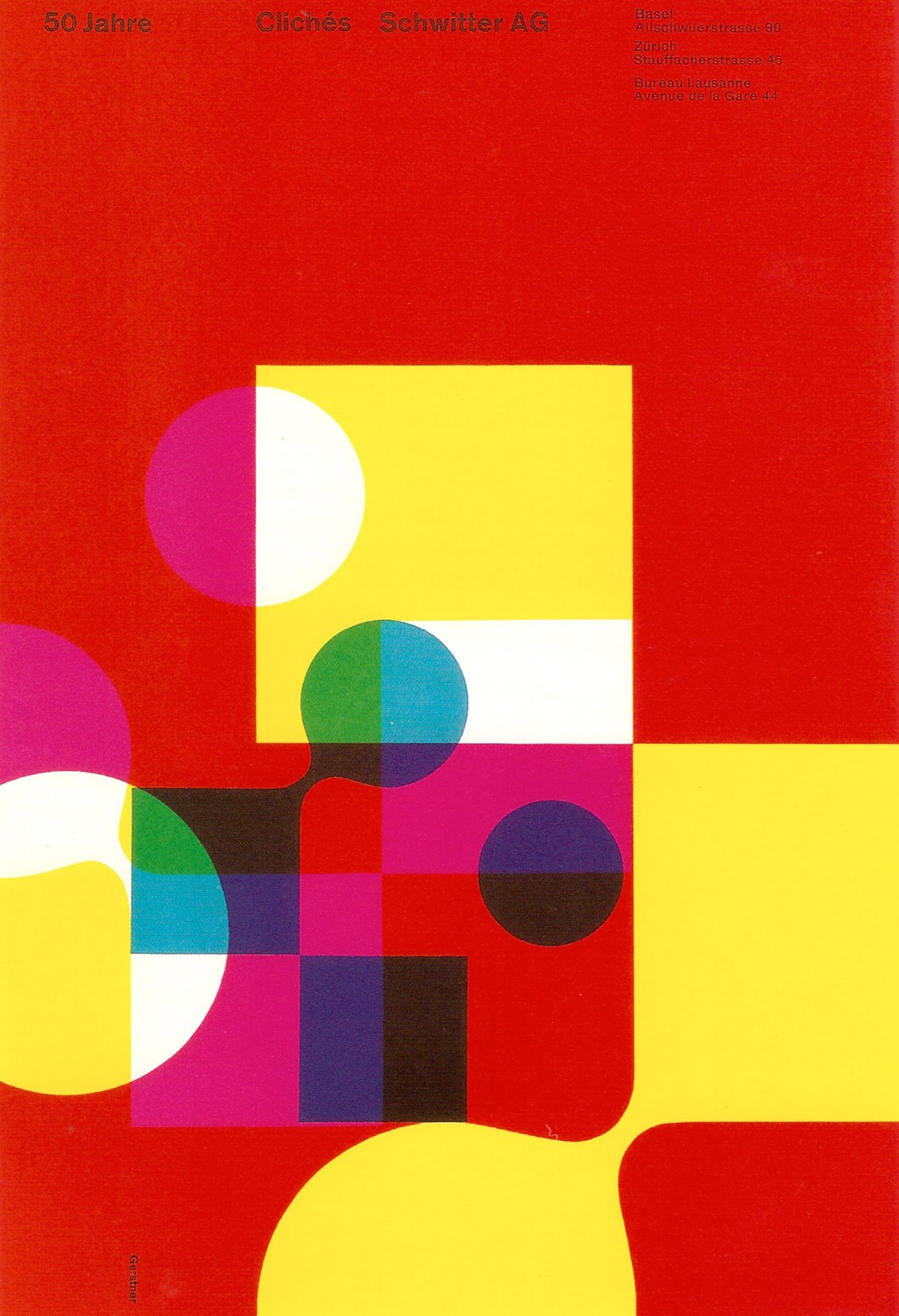
Furthermore,, looking at the generative design thorough Gerstner’s lens is very interesting. Gerstner defines design as picking out determining elements and combining them. Much of his design theory hinges on the designer’s ability to make informed choices based on understanding of the problem and the combinations of elements.
A prime example is his Morphological Typogram System. Usually, for a graphic designer, the development of a logo takes time, experimenting with different variations, sizes, colours to find the best solution. Gerstner’s program is intended for designers to systematically produce a number of variations of such logo. It lists a number of parameters of type on the left column and then it’s broken down into how each particular parameter can be modified and eventually affect the final outcome. For example, the typeface is broken down into sans- serif, roman, german etc…
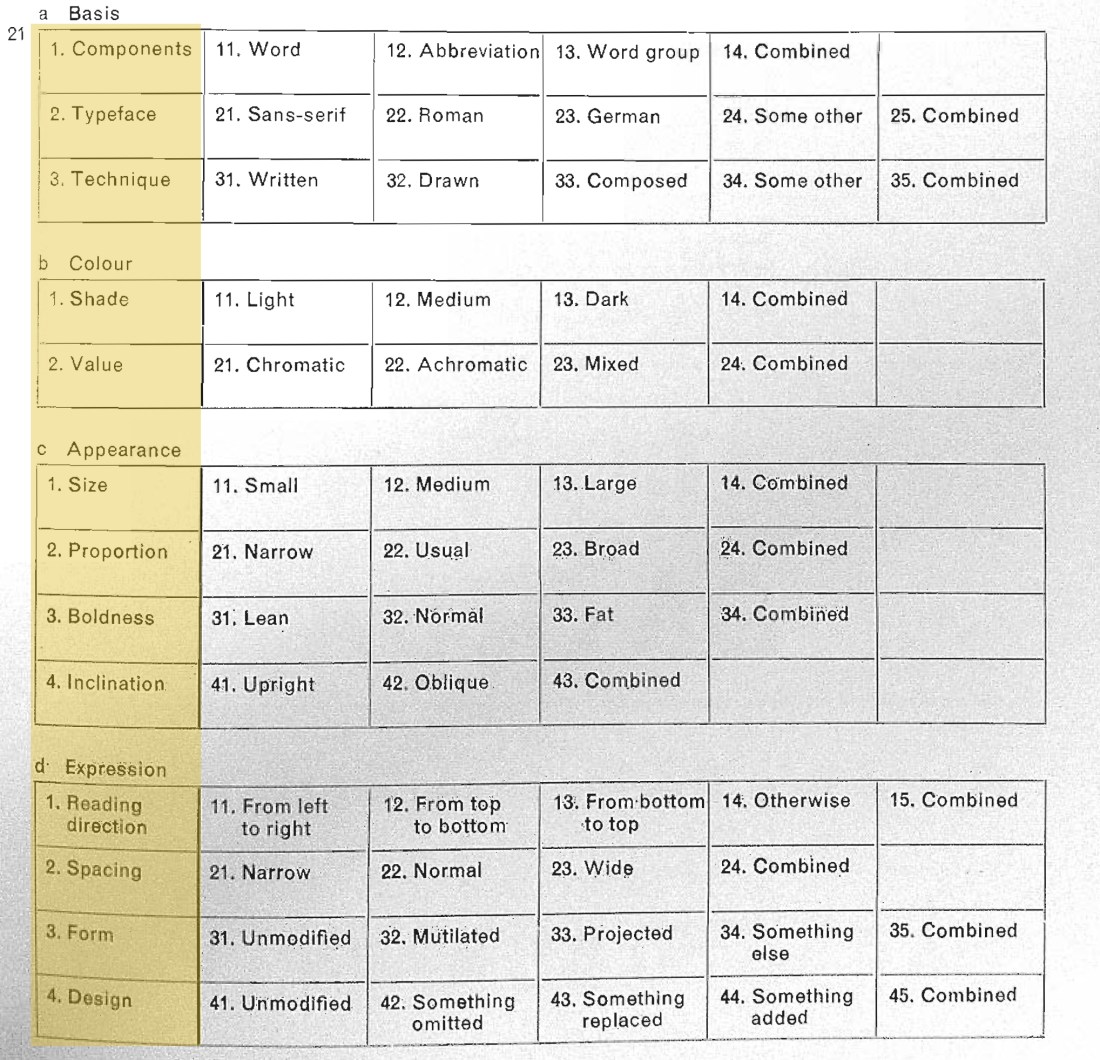
With this programme, the designer can quickly determine a good approach to the wordmark and then develop a solution.
Moving on, We’ve looked at ‘Pendulum Music’ by Steve Reich. Personally, I found it really interesting because it made me realise that generative design is not only applicable within the realm of visual arts, but also in other aspects of design, such as music in this particular example.
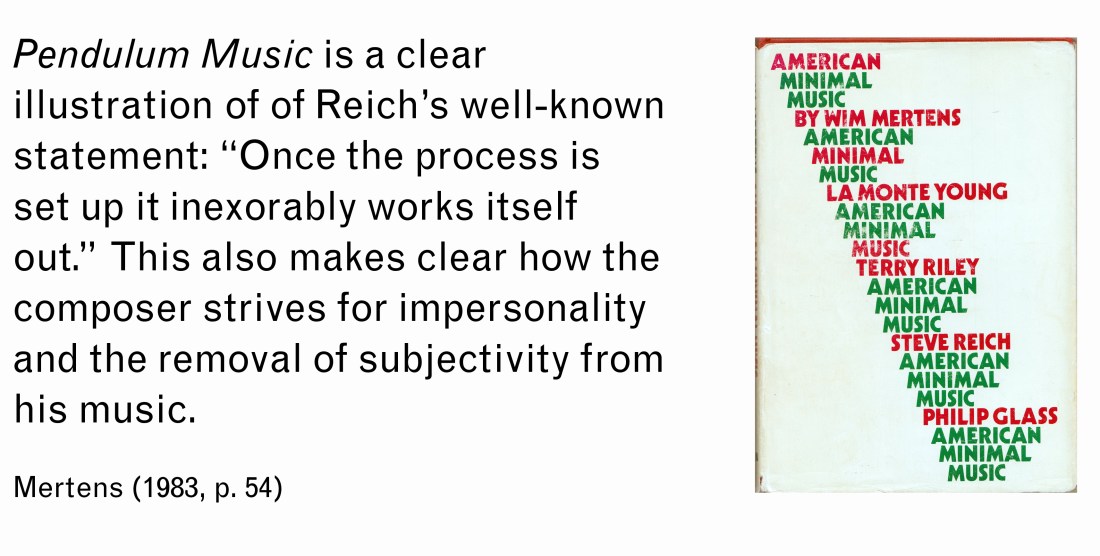
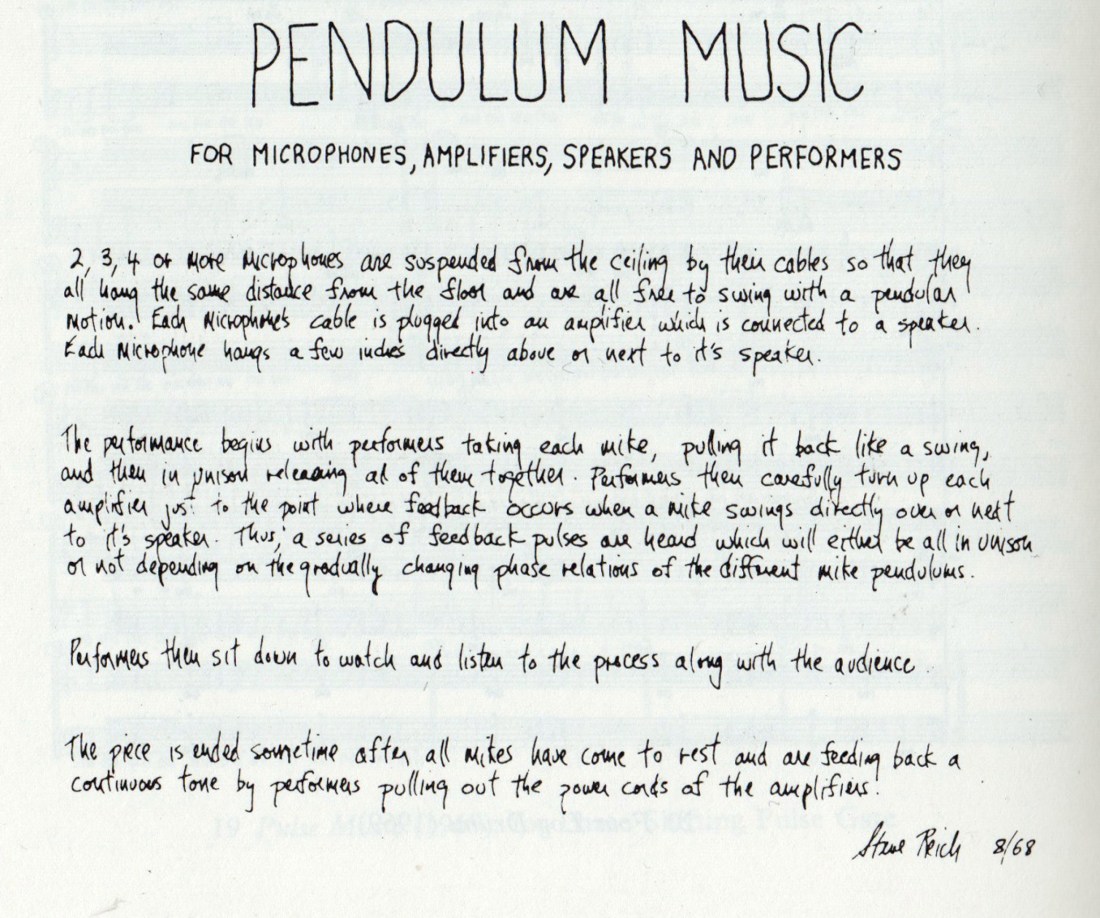
Same as visual generative designs, the creation of pendulum music sits in the process. A set of instruction was provided to create this outcome. It shows that the creative process is the art itself, sometimes even more than the outcome.
I was asked, “Who is the ‘creative’ author of this music?” and whether the piece is personal or impersonal. In my opinion, the author of this piece is Steve Reich, this is because he was the one who came up with the concept and the set of instructions. He provided a step by step process that can be followed by anyone, but it doesn’t mean that with each ‘creation’ the ownership changes from person to person.
Furthermore, I think that the outcome is impersonal. This is because only the instructions can be described as a feeling based input to this piece, once the performers released the microphones the music was a creation of the process and it was not influenced by anyone. It clearly shows that the author was looking for impersonality and to remove any subjectivity from his music.
Finally, to conclude this blog I think that Generative Desing helps generate a random outcome, which otherwise would be difficult to achieve. It opens up a ‘door’ to new, never before explored ideas/outcomes. It attracts attention to the process rather than the final outcome itself, making the creative process the art itself.
_n.
 WOJTAROWICZ